Archive for the ‘Maryland Car Insurance Rates’ Category

Maryland Insurance Safety Programs, Services And Driver Improvement

Posted on:

Keeping Maryland residents safe is the priority of the Motor Vehicle Administration, Highway Safety Office, and the State Government. Through many programs and specific legislation,  Old Line State drivers and pedestrians are protected quite well. Discussed below are many of the most pertinent resources available to consumers. Safety programs and tools from the National Highway Traffic Safety Administration help protect consumers and reduce car insurance rates.


Driver Improvement Program (DIP)

DIP is an instructional and interactive program designed to improve and educate drivers. Typically, residents are assigned to the program (4-8 hours) for one of the following reasons: Total of 5-7 points on driving record, probation when charged with a moving violation and  having provisional license, convicted or granted probation for a moving violation while holding a license (provisional), District Court Judge referral, or Administrative Law Judge referral.

Correspondence via mail will be sent  if a judge rules that completing the program is required. The letter is typically sent 4-6 weeks after the official hearing date. If a new license is ultimately required, the cost is generally between $30 and $75. A photo ID card can also be purchased for $20-$24.

The correspondence will provide details regarding the driver’s obligation and  a list of nearby driving schools. Upon receipt, the class must be selected and completed by the due date. Approximately 4-8 hours should be allotted. A certificate of completion and compliance will be provided. If you miss a scheduled class, documentation for a valid reason will be accepted, and a new class will be scheduled. The MVA office is located on Ritchie Highway in Glen Burnie.

Don’t Miss Your Classes!

Missed classes without a valid exception can result in a suspension or revocation of a driver’s license. If you are located out-of-state (temporary or permanent), the National Safety Council must be notified to determine if a local program is offered. Verification of the out-of-state completion must be provided. A change of address may need to be processed if the MVA has not been notified. If a referral letter is lot, a duplicate can be ordered.

Following the assignment to the DIP Program, a provider should be contacted to discuss class times and availability, along with the costs of participation. Lost letters can be replaced although driving privileges can be terminated if class is missed. The National Safety Council should be contacted if you have moved to a different state. A phone call is the initial recommended type of communication.

DIP providers include Method Driving School, Introspect, ABC Linnel Driver Training Programs, Widmyer Driving School, AB Discount Driving School, Alpha One, Elite Driving School, Emerald Driving Academy. Greg’s Driving School, Integrity Driving School, Leap Driving Academy, Majestic Driving Academy, Mt. Washington Driving School, National Driving School, Premier Driving School, Quick Tag And Title, SAHR Driving School, Street Smarts Of MD, and Uncle Sam Driving School. Additional providers are available for Three Hour Alcohol And Drug, Driver Education, and Motorcycle Safety.

MVA fees may be imposed, depending upon the situation. Common fees include driver licensing, MVA records, medical advisory board, motorcycle safety program, dealer licensing and consumer service, driver education, driver improvement, insurance compliance, vehicle emissions, vehicle registration, and registration plates fee. Farm trailers and farm semi-trailers can also be registered.


Vehicle Occupant Protection

For more than 20 years, Maryland law requires wearing a seat belt while driving. Utilization of seat belts and child restraint systems has saved thousands of lives, and drastically reduced the number of serious injuries. Collisions with motor vehicles are the leading cause of child deaths in the US, so “buckling up” is critical. Fortunately, the number of vehicle crashes and seriously-injured vehicle occupants not wearing seat belts, is declining. Areas with the highest percentage of incidences are the city of Baltimore, and the following counties: Anne, Arundel, Carroll, Harford, and Howard.

Statewide usage of seat belts is approximately 91%. The low was 89% in 2004, while the highest percentage was 94% in 2010 and 2011. The state law requires that all occupants in the front and back seats, must be buckled up. Drivers can not operate the vehicle until all passengers are fastened by a seat belt or children’s safety seat. Violators can be fined $50. If passengers not wearing a seat belt are over 16, the driver can be fined as much as $83.  If a driver and child are both unbuckled, two tickets will be issued to the driver. There is no limit to the number of violations that can occur.

Hospitalization expenses  are approximately 50% higher for drivers and passengers that are not wearing seat belts or restraints. Often, federal and state governments pay a large portion of these expenses. A frequent cause of vehicle injuries is the misuse of booster and car seats for children (see below). Unrestrained children can also cause harm to other occupants of the vehicle. The National Travel Safety Institute provides additional tips.

Note: If the driver is not buckled, there is a 70%-80% chance that any children in the vehicle also are unbuckled.  Also, with the written permission of a licensed physician (for medical reasons), a driver does not have to fasten their seat belt. Children that are unrestrained, and involved in a 25 miles-per-hour collision, are likely to be seriously injured. Incorrect installation, using unapproved or expired seats, and using broken seats, are quite common. Maryland Child Passenger Safety Laws are very clear regarding  securing children in a safety seat.

Helpful Hints:

You are not safer in a pickup truck than a passenger car.

Lap belts should be fastened approximately 2-4 inches below the waist.

Using the lap or should belt the wrong way can result in serious injuries.

Placing the belt over the pelvis is recommended.

Once a child reaches the maximum rear-facing weight limit, the car seat must be turned around (facing front).

Although sometimes inconvenient, seat belts should also be used in back seats.


Aggressive Driving

Aggressive driving can occur in many situations. Common examples are speeding, improper passing, weaving in and out of lanes, abruptly slamming brakes, tailgating, improper passing, ignoring traffic lights and stop signs, and forcing a vehicle off the road. Crash reports involving this type of behavior typically include drivers that fail to yield the right of way, exceed the speed limit, disregard road signs or markings, drive the wrong way, consume alcohol in excess of legal limits, merging in front of a passed vehicle, improper pass, passing on the right, or follow too closely.

Maryland Drivers Insurance


Although highway and roadway fatalities continue to reduce, vehicle deaths continue to be the leading cause of deaths in the US. When aggressive driving is present in an accident, the chance of death increases. Locally, most of the fatalities occurred in the Washington and Baltimore areas. Baltimore and Prince George Counties have the highest incidences of death, accounting for more than 30% of all fatal crashes from aggressive operators.

The months with the most fatalities are October, November, and December. Friday, Saturday, and Sunday are the most dangerous driving days. Thus, driving on weekends in the winter months can be very dangerous!

Males are responsible for more than 60% of the crashes and suffer four times as many fatalities. Maryland has an aggressive driving law that charges $370 for each violation  and adds five points to the license. To qualify, three violations from this list below must be present: failure to yield, passing on right, passing and overtaking, speeding, following too closely, operating on loaned roadway, and traffic lights.

To help reduce this type of behavior, the ADAPT (Aggressive Drivers Are Public Threats) program was developed four years ago. A combination of enforcement and media exposure helps drivers recognize  potential issues, and eliminate them before a problem develops. An education program, aided by public service announcements, radio and TV advertising, social media, and online streaming, helps to increase consumer awareness. The ADAPT campaign resulted in 115,000 citations for aggressive behavior by drivers.

To help avoid aggressive drivers, avoid eye contact and remain relaxed, shift lanes if they are behind you, don’t escalate the encounter, don’t increase your speed when they are behind you, don’t block the passing lane, and avoid name-calling and  obscene gestures. If you continued to be followed, if possible, drive to the closest police station. And of course, seat belts should always be utilized for the driver and all passengers.


Impaired Driving

Drugs, alcohol, and medications are the leading causes of impaired driving. The consequences can be fatal to the driver, passengers, and other vehicles on the road. Although ignition interlock systems and road checkpoints help, the number of impacted drivers, passengers, and pedestrians is still too high.

Noah’s Law (Drunk Driving Reduction Act of 2016) has helped keep drivers safer, by bolstering the Ignition Interlock Program. This legislation requires an interlock device for any person that has been convicted of a DUI, DWI (if transporting a passenger under age 16), or a death caused by a DWI or DUI. The device must remain attached to the vehicle for a minimum of 6 months and a maximum of 3 years, depending upon the number of incidents. If the vehicle does not have an installed ignition interlock device, it can not be driven.

Any person that declines to take a chemical test and receives a DWI, must use an interlocking device for 12 months. In some instances, an interlock ignition program may be used in lieu of a suspension. Also, if a blood alcohol concentration of 0.08 is found, participation in the program may be selected instead of disputing the findings. Additionally, high-risk car insurance rates in Maryland are substantially more expensive than preferred rates. Naturally, it’s a situation you always want to avoid.

Any person that is caught selling fake identification cards may be subject to two years incarceration and a $2,000 fine for each incident. Homeland and federal laws may also add additional fines and additional incarceration. Persons under age 21 that possess a fake ID can be fined $500 and face two months in prison. Twelve points will also be added to your driving record.

The highest number of driver-impaired crashes occur during the late-evening hours and on weekends. Most crashes happen on Fridays, Saturdays, and early Sunday. After 3 a.m., there is a significant reduction in incidents. Two programs designed to reduce the number of accidents are the Checkpoint Strikeforce, and the State Police Impaired Driving Reduction Effort. The 20th annual  Checkpoint Strikeforce public education campaign occurred last year with sobriety checkpoints and additional patrolling by police officers. More than 100 law enforcement agencies participate in the program.


SPIDRE

The State Police Impaired Driving Reduction Effort (SPIDRE) was created in 2013, and targets specific areas with high incidences of alcohol-related crashes. The DOT  Highway Safety Office funds the program. Five specialty-trained state troopers concentrate on these specific areas to reduce the number of injuries and death. The most recent annual statistics include more than 3,500 DUI arrests, 25 DUI drug arrests, 11,000 traffic stops,and  25,000 citations.

The program is responsible for an increase in the percentage of convictions in DUI cases. Bar patron surveys were effectively used to conduct research and evaluate data.


Distracted Driving

Phone use and texting cause drives to become distracted while driving, and not pay full attention to the road and surroundings. Pedestrians, other drivers, and passengers are at risk. The most common distractions include watching a video, eating, drinking, combing hair, looking in purse or wallet, talking to other occupants in the vehicle, and changing radio stations. The four types of distractions are cognitive, manual, visual, and auditory.

Cognitive – Taking your mind off the drive. Common examples are daydreaming, speaking to another passenger, and talking to someone on a hands-free device. When not concentrating on the road, there is a much greater chance of an accident occurring.

Manual – Taking your hands off the steering wheel. Drinking, eating, and smoking are common examples. Having only one hand on the wheel is also considered a manual distraction.

Visual – Taking your eyes off the road. A split second can easily result in substantial damage.

Auditory – Affects our ability to hear. Ring tones, loud conversations, screaming kids, and text notifications will impact our hearing.


Fortunately, the number of distracted driver incidents in the state has been declining. Deaths are also declining although almost have of all Maryland crashes were directly or indirectly caused by distracted drivers. Since 80% of these types of accidents result in an injury, it’s critical to continue to reduce the number of incidents. Most of the crashes occurred in the Washington/Baltimore areas.


Pedestrian Safety Information In Maryland


Pedestrian Safety

Pedestrian-involved accidents and injuries have increased for pedestrians, since 2013. Typically, more than 2,000 pedestrian crashes occur each year, with more than 80% resulting in injuries or fatalities. 20% of persons that are killed in vehicle crashes, are pedestrians. Most of the crashes take place in the Washington and Baltimore metropolitan areas. Prince George County typically has very high fatality rates. Other counties with high rates include Anne Arundel, Carroll, Harford, and Howard.

Friday is the most dangerous day for pedestrians, especially between 3 p.m. and 10 p.m. Young drivers are responsible for the most number of pedestrian accidents, while older drivers are involved with a high number of fatalities. Males are typically the victims in most accidents. About 70% of pedestrian fatalities are male.


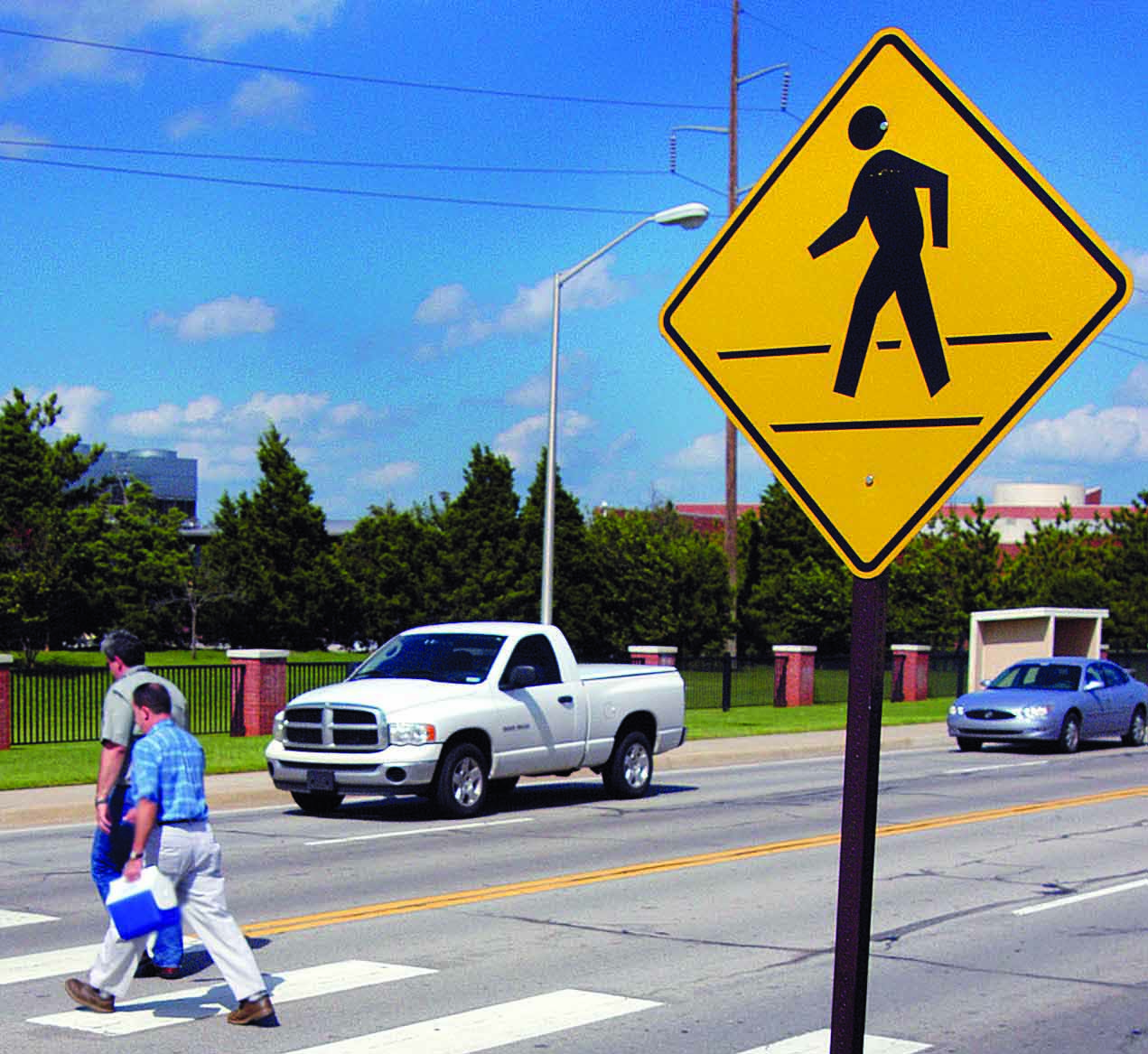
Maryland pedestrian safety laws and penalties include:

Passing a vehicle stopped for a pedestrian ($80-$500).

Not stopping for a pedestrian in crosswalk ($80-$500).

Failure to obey pedestrian control signal ($40-$500).

Pedestrian illegally on roadway ($40-$500).

Failure to yield right-of-way to vehicle ($40-$500).


Bicycle Safety

Current Traffic Laws for Bicyclists:

Persons riding bikes should stay as close as possible to the right side of the road. Some exceptions include avoiding a pedestrian, making a left turn, driving on a one-way street, and operating in a narrow lane.

A passenger can not ride on a bicycle, unless it is designed and properly equipped for an extra rider.

Bicycles are not permitted on roads or highways when the speed limit is 50 mph (or more).

You can not touch or hold onto another vehicle.

A rider can not operate a bicycle while wearing earplugs or a headset that covers both ears.

A bicycle can not be fastened to a fire hydrant, pole, or meter.

Cyclists must obey traffic laws and are highly-encouraged to wear a helmet. Drivers of vehicles must also be cautious and courteous. Typically, when a crash occurs between a vehicle and someone on a bike, the cyclist is injured. Bicycle crashes have been increasing for the last five years, and more than 80% of those crashes resulted in an injury or death. Most crashes occurred in the Washington DC and Baltimore areas. The months with the highest number of accidents were June, July, August, and September.


School Bus Zones

All sides of the bus are at risk when children are waiting to be picked up. Children should stand at least 10 feet away from the bus and never stand or walk behind it. Passing a bus or another vehicle is one of the leading causes of fatalities in a school zone. The most common reasons children are hit include not staying within the bus driver’s sight, dropping an item and picking it up, attempting to get off the bus too quick, and making the assumption that motorists will see them.

Tips for drivers:

Be alert for unexpected events.

Understand what flashing yellow lights and flashing red lights mean.

Watch for children playing in unexpected locations, including bus stops.

When leaving home, watch for children riding or walking to school.


Maryland Kids Safety


Child Passenger Safety

Children under eight-years-old  are required to be placed in a child-restraint. An exception is made if the child is at least 4’9″. Children 8-16 must be appropriately fastened in a seatbelt, if not placed in a child restraint. The driver must ensure that all passengers are buckled up before operating the vehicle. Note: Children are permitted to be placed in the front seat with the proper protection. Rules apply to all vehicles, regardless if they are in-state or otherwise.

Kids In Safety Seats (KISS) is  funded by the Maryland Highway Safety Office.  Several services offered by the program include reduced costs and special needs assistance for car seats, virtual and in-person car seat inspections, and email, phone, and website free safety information. Selection of the best car seat, and availability of training and presentations are available through their website.


Driver Wellness And Safety Programs

3-Hour Alcohol And Drug Education – The program is mandatory if you only have a military license or have a non-US license. A certificate is provided when the program is successfully completed. A list of companies offering the program is available along with their fee schedule.

Ignition Interlock – Persons that have been arrested for impaired driving are offered an option to avoid a suspended license. Driving is permitted, but only under careful supervision. Cameras are included on all new devices. If the alcohol concentration reading is .15 or higher, a one-year  program enrollment is required. A reading between .08 and .15  requires a 180-day enrollment. Written proof of the installation is required, and the participant will be notified of the required length of time that must be completed.

Modified Vision Program –  A restricted license is provided to drivers with correct vision less than 20/70, but not worse than 20/100. Continuous field vision is also required. A daylight restriction may possible be removed after 12 months. The Driver Wellness And Safety Division processes the paperwork. New and experienced drivers have different requirements. Applicants that have never had a valid driver’s license must complete clinical and active driving requirements along with 80 hours of supervised and customized driving.

Reinstatement Of A Revoked Driver’s License – After 12 accumulated points, it is possible to reinstate your license. One revocation results in only a 6-month waiting period. Two, three, and four or more revocations results in 12-month, 18-month, and 24-month waiting periods respectively. If a reinstatement request is denied, an appeal may be submitted.


Motorcycle Safety Program

Motorcycle rider training courses are offered to all operators  by the MVA. Skills and strategies are taught and discussed, which leads to a decreased chance of injury or fatality. About 9 out of 10 accidents occur to riders with limited or no training. Although adult training is not required, persons under age 18 must complete a Basic Rider or Alternative Basic course. Many training facilities are available.

Although the number of crashes has decreased in the last five years, the number of fatalities has slightly increased. However most crashes result in an injury or death. And as expected, higher-populated areas have the most crashes and injuries. More than 50% of reported crashes were in the Baltimore area, with warmer months the most dangerous. Operators between the ages of 25-49 generally account for about half of all crashes, with male drivers accounting for about 90% of those crashes.

Helmets are required by the Department of Transportation, subject to specific standards. Helmet manufactures are required to certify compliance with acceptable standards. A windscreen or approved eye-protective device also must be worn. Nineteen  training centers are located throughout the state including Cumberland (Willowbrook Road), Arnold (College Parkway), Westminster (Washington Road), Frederick (Opossumtown Pike), Hagerstown (Robinwood Drive), and Baltimore (Pulaski Highway).

A strategic highway safety program (SHSP) helps reduce the number of highway deaths, and serious injuries on all roads. The number of serious deaths and injuries has gradually reduced over the last 10 years, as implemented changes continue to be effective. The TZD (Towards Zero Deaths) campaign is supported by the MD Chiefs of Police Association, Association of County Health Officers, and several additional organizations. Reducing fatalities by up to 50% by 2030 is the ultimate goal.

Motor scooters and mopeds do not require a class M motorcycle license. However, operators must have a valid driver’s license. An identification decal must be visibly displayed, and approved eye protection and a compliant motorcycle helmet must be worn.  The right side of the road must be use unless  making a left turn, driving on a one-way street, avoiding road hazards or pedestrians, or passing a slow-moving vehicle. Headsets that cover both ears are typically not allowed. The maximum operating speed is 30 miles per hour.


Older Drivers

Advanced aging can impact your reaction, sight, and hearing, and subsequently your ability to safely operate an automobile. Several self-assessment guides are available, including “Am I A Safe Driver,” “Test Your Driving IQ,” “5-Question Test,” and “DriveSharp.” Medication assessments, professional evaluations, and MVA screenings are also provided. Driving Safety course offered include AAA Roadwise Driver For Seniors, AARP Driver Safety Program, and AARP Smart Driver TEK.

About 20% of Maryland’s population is over the age of 60. In 10 years, the percentage will increase to 25%. The most common crashes for older drivers are turning left at an intersection with a stop sign, merging onto a ramp with a yield sign, changing lanes on large highways, and turning left at an intersection with a green light and oncoming traffic. The number of crashes and fatalities caused by older drivers has steadily increased over the last 10 years.

The MHSO (Maryland Highway Safety Office) provides summary crash data to the public. An annual highway safety plan is also available for the review of projects.


Highway Safety Office Grants

Applications are granted by the Maryland Department Of Transportation Highway Safety Office. Local and state governments, non-profit organizations, and law-enforcement agencies are eligible for grants. Additional information is available online and through the mail.


Save Money On Your Homeowner’s Insurance

Posted on:

Get the best homeowner’s insurance rates in Maryland and pay less! Although prices seem to typically rise each year, there are several options that will help you lower premiums, and put more money in your pocket. As one of your most important assets, you need to protect the value, and make certain major repairs and damage are covered. Get instant pricing online for any properties you own by using our free calculator.

Prices have been increasing in recent years, and some of the rate hikes have been substantial. Although coverage on the dwelling and contents grow to keep pace with inflation, premiums typically should not go up this fast. A combination of weather-related claims and higher incidences of theft have been partially to blame. 2023 prices have remained fairly level, or slightly increased. Coverage amounts on dwelling and personal property have also slightly increased to keep pace with inflation and building costs.

Nationally, Maryland rates rank 10th (from lowest to highest). The  states with lowest average prices are Kansas, Oklahoma, Colorado, Missouri, Florida, Minnesota, Kentucky, Kansas, South Dakota, and Tennessee. The states with the highest average prices are Maine, Pennsylvania, Hawaii, Delaware, West Virginia, Utah, Idaho, Vermont, Nevada, and New Jersey.

There are many ways to save money on your homeowner’s insurance rates in Maryland. And no, selling your house and moving to an apartment is not one of them! We help explain these rate reductions and show you how you can reduce your premium, and still retain and leave unchanged the core components of your policy. Although we are better recognized for writing about the best auto insurance companies in Maryland, we believe you’ll find our list of home discounts quite helpful.


Bundle Up!


The multi-policy discount will benefit you in two ways. Firstly, you will immediately see a 10%-25% reduction in your rates (the discount fluctuates between carriers) when you insure your vehicle and home with the same company. And of course, your auto insurance premium will also reduce, possibly as much as $100-$300 per year. Since vehicle insurance rates are generally higher than homeowner’s premiums, the discount is very helpful. And the reduction remains level each year.

Secondarily, having  several lines of business with a company somewhat insulates you against cancellation or termination of policies. Of course it won’t prevent your policy to be canceled after three house fires! But it will provide additional leverage if the number of claims you submit places you in a high-risk category for cancellation. Typically, three submitted claims within a 5-7 year period can create an underwriting flag that may result in a cancellation. Fire, vandalism, and theft claims cause the most underwriting concern.

But if you currently insure your automobiles and house with separate companies, combining them could make a tremendous difference in what you pay. In addition to the multi-policy discount, it’s very possible that by simply comparing car insurance rates with multiple insurers, the savings could be hundreds of dollars of savings every six months when you receive the renewal statement. Combining contracts is often a big money-saver, and provides limited insulation from an underwriting cancellation.


Retired Discount


MD Discounts For Home

Discounts For Your Maryland Home Insurance

Another big premium-saver occurs if all of the adults in the household are retired. Usually, at least one of the household members must also be 55 or older. If someone works part-time, that still may be acceptable. The rate reduction is typically in the 5%-15% range, but it is applied every year, so it’s easy money that gets put back in your pocket. Generally, retirements before age 55 do not generate a discount.

Sometimes, there will be higher reductions for persons 65 or older. The assumption is that you spend more time inside the home. At this time, there is not a major reduction given to applicants over the age of 75. However, positive claims results may sway insurers to offer a price reduction. Discounts for home monitoring may also be introduced within the next few years.

As actuarial data is studied, it’s possible a change could be made in the next five years. The biggest concern is potential health-related issues that could cause or contribute to an accident or extra liability exposure. Condo and renters policies will often offer these same Senior discounts, although the amounts may be slightly less. One of the largest factors in determining renters policy premiums is the incidence of theft in the surrounding area of the policyholder, and of course, claims history.


Alarm Systems


Of course, an obvious money-saver is owning an alarm system, especially a system that is professional-monitored.  Every major Maryland homeowner’s insurance carrier offers this discount. The “central” system will save the most money. Typically, this type  will notify a local police and/or fire department if there is an attempted break-in or the smoke detectors go off. Usually this will reduce your premium about 15%. Occasionally, the reduction may be as much as 25%, depending on the effectiveness of the system.

Many system upgrades are offered by manufacturers, which could result in additional savings. SimpliSafe offers many alarm system packages that are easy to install, and provide discounts on most home policies. Outdoor cameras can also be purchased and a professional setup offer is available for a reasonable cost.

A “local” alarm system is still armed by the owners of the home from a keypad usually located  near a major entrance. However, additional keypads can also be purchased. If the alarm is tripped, an incredibly loud buzzer will go off. I know it’s loud because each of our children (when they were younger) reminded us of that (by accident)! Since the police are not automatically contacted, the discount may only be 5%. These types of systems can be easily upgraded, and installation is very simple..

Many new and inexpensive alarm systems have become available within the last five years. Several popular options are Frontpoint, Vivint, ADT, SimpliSafe (see above), Protect America, Link Interactive, Scout, Nest Secure, LifeShield, and Brinks. Homes without alarm systems are three times more likely to be burglarized than homes with an alarm system. “Ring” doorbell/alarm systems are very inexpensive and can be quickly installed with easy exterior door and window coverage.


Central System Is Best


A “central” alarm may not cost anything to install, but there will be a monthly monitoring fee. This can range from as little as $25 to as much as $150. Usually, these fees are negotiable, so shop around if you are considering buying this type of system. A local experienced company will likely offer you the best service. Never purchase a system from any type of telemarketing call you receive. Their sole purpose for calling is to obtain your credit card information.

And what about the fake alarm stickers and cameras you can purchase to place around the perimeter of your home? I don’t know of any carriers that will consider them, but it may not be a bad idea if you can’t afford an alarm. You can probably order a set of four or eight stickers very inexpensively. And the fake alarm camera does look real and is typically high enough that nobody will want to touch it. However, after about three years of  snow, rain, wind and hail, your fake “system” may need to be replaced.


Look Above Your Head


Discount Auto And Home Insurance Maryland

This Is A Very Expensive Roof!

Are you thinking of getting a new roof? If you need one, and actually replace your existing roof, many home and auto insurance companies in Maryland will cut your premium. The main reason is that the risk of damage to the roof will have reduced, and often there are warranties from the roofing companies that may pay some damages, if the shingles were faulty. Each  roofer is different and, of course, don’t buy a new roof just for the discount!

A new home (as well as a new roof) generates a big discount, often as much as 25%. Newer houses typically translate into fewer claims and a smaller chance of problems. Therefore, your rate is substantially reduced. Also, newer, and more modern shingle designs provide more protection and last longer, which helps reduce your premium.

Impact-resistant roofing materials are also a great way to cut down on potential claims. Hail claims are greatly diminished since pellets typically bounce off the roof without causing damage. It’s also possible that fallen small and medium-sized branches will not cause harm either. Each carrier has their own set of underwriting criteria, so check with the carrier before making changes to the roof.

There are also multiple options regarding how comprehensive you want your roof coverage to be. By electing a separate deductible and/or higher out-of-pocket expenses (if you submit a roof claim), you’ll save money each year, since roof claims are among the most common. However, all carriers do not offer this benefit option and the amount of premium reduction varies.


Additional Unusual Discounts


Although not as common, several companies offer a credit if most (or all) of your wiring has been recently inspected and upgraded. Since the risk of fire reduces,  everybody wins. Expect about a 2%-5% reduction every year. Proof of service and installation will probably be required. And of course, a professional electrician would have to handle the installation. Adding LED lighting will also save money, and provide more exterior light at no extra cost.

A “claim-free” reward is offered by almost every carrier, and it can easily save hundreds of dollars each year.  Although larger claims must be filed, often it’s better to raise your deductible since it’s not advisable to constantly submit smaller claims. Multiple weather or natural disaster claims are treated more favorably by underwriters than fires, thefts, and vandalism.

Many years ago, a $100 or $250 deductible was common, and recommended by most companies and brokers. But now, a $500 or $1,000 deductible is much more cost-effective since it’s unlikely you will be submitting claims under the $250 threshold. As earlier mentioned, the quantity of submitted claims, as opposed to the amount of claim dollars spent, is often what underwriters take into consideration when determining to renew or cancel an in-force policy.

If you reside in a gated community (not a condominium community), because of the increased safety, a small discount may be applied to your policy. If your vehicle is parked under a roof or in a garage, the auto insurance policy may reduce. Home improvements occasionally will lower the premium if the structure becomes more safe.

And finally, scheduled jewelry riders are expensive. Depending on how many pieces you insure, and their combined value, you could easily add hundreds of dollars of extra premium to your policy every year. Check and verify that you still own all of the jewelry and want it scheduled. Also consider cheaper riders that provide extra coverage without all-risk coverage.

Although storing your jewelry in a safety deposit box isn’t fancy, and of course, not very accessible, the cost is fairly low (sometimes free, depending on how much business you have with the bank). Safety is not an issue and you don’t necessarily have to schedule the items on your policy since they are protected. The annual cost is approximately $50-$100. Certificate of Deposit holders may earn a waiver of the fee.


Sample Homeowner’s Insurance Rates In Maryland (Annual)


Washington County (Hagerstown) – Home insured for $198,900 with $1,000 deductible and $300,000 liability

$462 – Donegal Mutual

$494 – Cumberland Mutual

$497 – Farmers Insurance

$510 – Farmers Mutual

$512 – NGM Insurance

$569 – Unitrin

$570 – Cincinnati Casualty

$608 – Travelers

$629 – Teachers Insurance

$632 – Penn National

$655 – Allstate

$656 – CSAA

$774 – Erie

$782 – State Farm

$903 – Amica


Harford County (Bel Air) – Home insured for $278,100 with $1,000 deductible and $300,000 liability

$535 – Unitrin

$616 – NGM Insurance

$631 – Farmers

$651 – Donegal Mutual

$690 – Travelers

$714 – Cumberland Mutual

$732 – Cincinnati Casualty

$741 – Penn National

$799 – Frederick Mutual

$823 – Teachers Insurance

$826 – Hartford

$842 – Nationwide

$854 – Safeco

$880 – Mutual Benefit

$883 – CSAA General


Anne Arundel County – Home insured for $370,000 with $500 deductible and multi-policy discount

$464 – Safeco

$723 – Brethren Mutual

$780 – Farmers

$910 – Frederick Mutual

$971 – Peninsula

$1,002 – Teachers Insurance

$1,048 – AIG

$1,148 – Travelers

$1,174 – Esurance

$1,187 – Horace Mann

$1,213 – Erie

$1,296 – State Farm

$1,394 – Allstate

$1,457 – Nationwide

$1,491 – Amica


Carroll County – Home insured for $350,000 with $500 deductible and multi-policy discount

$464 – Safeco

$583 – Brethren Mutual

$762 – Farmers

$793 – Frederick Mutual

$898 – Erie

$846 – Travelers

$847 – Pharmacists Mutual

$915 – Penn National

$960 – Liberty Insurance

$987 – AIG

$1,071 – Unitrin

$1,123 – Esurance

$1,212  – State Farm

$1,237 – Cincinnati

$1,627 – USAA


Baltimore County – Home insured for $247,000 with $1,000 deductible

$701 – Pharmacists Mutual

$721 – NGM Insurance

$725 – Erie

$728 – Donegal Mutual

$763 – Farmers

$799 – Cumberland Mutual

$800 – Penn National

$831 – Esurance

$843 – Travelers

$852 – Teachers Insurance

$863 – Liberty Insurance

$895 – Unitrin

$910 – Horace Mann

$955 – Encompass

$1,008 – State Farm


Sample Condominium Insurance Rates In Maryland (Annual)


Queen Anne’s County (Stevensville) Contents covered for $50,000 with $500 deductible and $100,000 liability

$185 – Selective Insurance

$207 – Teachers Insurance

$219 – Horace Mann

$230 – State Farm

$233 – Penn National

$248 – NGM Insurance

$251 – Allstate

$251 – Cincinnati

$279 – Mutual Benefit

$284 – American Property And Casualty

$291 – Encompass

$308 – Chubb National

$313 – Hartford Fire

$358 – USAA Casualty

$389 – Nationwide


Talbot County (Easton) Contents covered for $50,000 with $500 deductible and $100,000 liability

$176 – Cincinnati

$207 – Teachers Insurance

$219 – Horace Mann

$230 – State Farm

$233 – Penn National

$237 – NGM Insurance

$257 – Allstate

$257 – Meridian Security

$279 – Mutual Benefit

$285 – AIG

$296 – Donegal Mutual

$313 – Hartford Fire

$321 – Encompass

$326 – Travelers

$338 – Lititz Mutual


Cheap homeowner’s insurance rates in Maryland are available and we’re committed to helping you find the lowest prices. Through a combination of smart shopping and utilization of available discounts, we are confident you’ll save money. Of course, when you bundle your home and auto policies with the same company, expect a generous discount.

The MD Homeowner’s Insurance Administration Guide released current annual rates which we have listed above. Prices are updated each year. Topics of the guide include tips for buying a policy, obligations after a loss, types of policies, coverage included in policies, factors in the cost of coverage, force-place coverage by lenders, why coverage is needed, and assistance for persons that can not secure coverage.

Maryland Auto Insurance Laws And Regulations – Requirements And Rate

Posted on:

Maryland mandatory car insurance laws, rules, and regulations are set by the Motor Vehicle Administration (MVA). Auto insurance is required in Maryland since it is a mandatory vehicle insurance state. The state legislation stipulates that registered vehicles must carry the required published liability limits from an insurer licensed to do business in the state. Each mandatory state has minimum requirements and Maryland’s is $30,000 bodily injury per person, $60,000 for more than one person, and an additional $15,000 for property damage (30/60/15).

Higher limits are offered by all companies, although rates will vary. These limits extend to family members and persons given permission to operate your vehicle. Changes can typically be made on the anniversary date, or during the policy period if a claim is not pending. Maryland is considered an “at-fault” state for vehicle accidents, and as previously mentioned, is also a mandatory vehicle insurance state. Therefore, drivers are permitted to sue other drivers for compensation after an accident. Additional damages may also be recoverable. Typically, you can  file a claim with your carrier, file a claim with the other driver’s carrier, or sue the other party directly to recover damages.

Transportation network companies that have between 26 and 300 operators have higher limits. These requirements are $50,000 bodily injury per person, $100,000 for more than one person, and an additional $25,000 for property damage.  Commercial coverage is available from many carriers with much higher available limits. New residents must notify their current carrier to convert to a state-approved policy. Vehicle insurance is validated when you renew the registration. Coverage must be in effect before a vehicle is registered and insurance plates must be returned before a policy is canceled.


PIP Is Required

Uninsured motorists coverage and personal injury protection (known as PIP) are also required. PIP provides up to $2,500 of medical and disability costs arising from an accident. Both family and non-family occupants of the vehicle are covered (Full PIP). The $2,500 may be utilized for reasonable and necessary medical expenses that occur within 36 months of the accident and up to 85% of incurred and provable lost wages. Compensation is also available if the injured party was not employed. Surgery, recovery, and rehabilitation expenses are typically covered.

Persons that do not sign the PIP waiver and also are not eligible to reject coverage, receive the benefits described in the previous paragraph. Rejection of PIP is also an option. Coverage can only be waived for yourself, listed drivers on the auto policy, and family household members that are 16 years of age (or older). PIP can not be waived or other persons in your vehicle or other pedestrians you injure.  Car repairs and damage to other person’s property are not items covered along with reimbursement for taxis and buses. Note: PIP is also required in 16 other states.

There is also a “limited” alternative that excludes benefits to your family if they have reached age 16. However, the cost-savings is not significant. It should only be considered if you have private or group comprehensive healthcare benefits. Sustained injuries are covered regardless who was at fault. PIP payments are often paid quicker than reimbursements from a private or group health insurance plan. When the limited option is selected, PIP benefits may not be able to be collected under any motor vehicle liability policy.

PIP Rejection

Rejection of PIP is permitted if coverage does not exceed a specific limit, the carrier terminated the policy before the policy end date, and you were covered by a carrier other than the Maryland Automobile Insurance Fund (prior to applying).  The approximate 6-month PIP coverage cost (35 year-old male) is $40 for $2,500 of benefits, $58 for $5,000 of benefits, $73 for $7,500 of benefits, and $85 for $10,000 of benefits. When opting out of PIP, a waiver must be signed (Insurance code section 19-505a).

We help you understand different regulations in the state, and the impact any changes may have on your driving or the cost of your auto insurance. It’s important to “stay legal,”  and take advantage of any new laws or legislation that could help you save money. If you finance or lease a vehicle, requirements are often different. For example, leased vehicles typically require higher liability limits and more restrictive collision and comprehensive deductible options than a financed vehicle.

We also help you provide an FR-19 (Insurance Certification) which is required when you register or renew a vehicle. It’s important not to lose your certificate because only the original is considered valid. A copy will not be accepted if you are required to show proof. The FR-19 is valid for 30 days and must be provided by a licensed carrier and/or an authorized agent. The form is only used in several states (also Delaware), and serves a different purpose than an SR-22 Bond form. The MVA is located at 6601 Ritchie Highway Glen Burnie, MD. 21062.


Insurance Requirements

Your insurance must be certified and a written statement is required to verify that you will not drive without the proper coverage. This certification is the FR-19 and can be obtained directly by your insurer or a qualified broker. The form does not cost the driver any money and the original should be faxed or filed electronically with the MVA. A copy of the form is not accepted. It’s always a good idea to keep a copy at home or at your office. Also, updating the form every few years should be considered.  A USAA FR-19 is very popular.

Driving without the required insurance is not only illegal but it could be very time-consuming and expensive. About 12% of all Maryland drivers do not have coverage on their vehicle. For example, if your insurance lapses for three months, your fine will be $570. Even a one-month lapse will cost $150, with an additional $7 charge for each additional day.  The maximum per vehicle is capped at $2,500. There will be an additional cost for reinstating your car registration and to obtain new license plates. Although we can assist, it may be very time-consuming for you.

If you drive while the registration is suspended, the car may be impounded, and additional fines and penalties can be imposed. The Central Collections Unit will respond if prior notification requests are ignored. A 17% collection fee can be added to the outstanding fines. If a vehicle has been sold, your auto carrier can provide a letter that gives the date of loss and the date the vehicle was returned to the owner. Note: Geico, Allstate, USAA,  and State Farm insure the most vehicles in the state.

If you received a fine for a driving violation, and you can not immediately pay the entire amount, a suitable payment plan can be arranged. The CCU (Central Collection Unit) has many office locations that can begin the payoff process with a small initial payment. A credit card or cash can be used, but not a personal check. However, if you neglect to make the required payments, the vehicle will not be able to be driven, and no other vehicles will be allowed to be registered.


Penalties

Additional penalties can include paying a $25 restoration fee, not being able to renew a suspended registration, having your license plates confiscated, and paying a $1,000 penalty and risking jail time if  false proof of coverage is provided. If insurance lapse notifications are ignored, the Central Collections Unit (CCU) can collect an additional 17% of all outstanding fines. If your license plate or vehicle is stolen, a copy of the police report should be submitted so verification of the plates and date stolen can be verified. Once the plates have been found or recovered, MDOT should be contacted.

Vehicles that are repossessed, impounded, sold, totaled, junked, or sent out of the US, may require a letter from the insurance company, letter from the lien holder, bill of sale, or from the facility involved in the transaction. Information can be emailed, faxed, or sent via regular US mail.

Hopefully, you won’t have any outstanding unpaid tickets, because they will also have to be paid in full. The three convenient payment options are: 1. Mail your payment (money order or check) to MVA (Insurance Compliance), PO Box 2278, Glen Burnie, MD. 21060.  2. Pay in person with money order, cash, check, or credit card. 3. Pay by phone through an interactive system that is available 24/7. Uninsured motorists fees can be paid with a credit card.

The moral of the story? Don’t go anywhere in your vehicle unless it is insured. Once you are on the road again, you can compare auto insurance rates in Maryland on our website. Checking prices every few years ensures you are not overpaying for your coverage. Bundling auto and home policies provides a discount and possible substantial savings.


New Drivers

If you’re a potential new driver…Congratulations! Your first step is to obtain a Maryland learner’s permit. You must be at least 15 3/4 and pass a vision exam and a written test by correctly answering at least 17 of the 20 questions. There are also several forms of identification required. Proof of both residency and identity are required.  You should also take the driving test before your learner’s permit ends. If you wait too long, you’ll have to start the process over again which will be costly and time-consuming.

Compare Auto Insurance In Maryland

Maryland Car Insurance Rates Are Affordable

Once you are licensed, of course, you must purchase your auto insurance with at least the minimum liability limits earlier discussed. You can also be added to an existing policy if the car you will be driving is owned by someone else (assuming a parent). Insurance ID cards should always be kept with you while you are driving. Keeping copies in your wallet/purse and glove compartment will satisfy just about all situations. NOTE: The National Driver Registry will be contacted, to ensure a current license is not suspended or revoked.

If you lose your ID card or your driver’s license, they should be promptly replaced. You can go to a local license and title bureau to have a duplicate made. You also can request a copy from the BMV although the process may take longer than visiting the local bureau. Temporary ID cards may be available in specific situations.

If you are a new resident of the state, you have up to 60 days to obtain a valid license (30 days for a commercial license). When you apply for a new license at a BMV location, there are a number of items you will need including identification and proof of residency. It’s possible that a vision exam may be required. Older seniors may have additional criteria to meet although a routine physical is not required.

You should also review your entire auto insurance policy with a local broker. Rates will be different in Maryland and you may want to adjust some of your coverage, including deductibles. Available discounts will differ from your old policy, so you may qualify for some new reductions. Your driving distance to your employer my also have changed, resulting in a different premium.


Rookie Driver Program

“Graduated Licensing”  is used to give young persons more experience at early ages. A driver education course and on-road experience helps develop confidence and experience. There are now three levels of training. They are  “Learners Permit,” “Provisional License” and “Full License.”

Learners Permit

You can obtain a permit at 15 years and 9 months. You must verify your identity and show proof of school attendance. For applicants under age 18, a guardian or parent must cosign the application. Minor applicants may be required to submit multiple documents, including a tax return or health insurance ID card. Two tests are required (vision and general knowledge) before the permit is approved.

There is an available  manual with sample tests and training that can help you prepare. Driver safety facts, highway signs, and traffic laws are three of the most important topics discussed in the manual. A basic understanding of these topics is required to pass the exam. A vision screening and knowledge exam must be passed before a license is issued.

Provisional License

The provisional license requires an age of at least 16 years and 6 months. An approved driver’s education and training course must be taken and completed and 60 hours of supervised hours on the road must be documented. Driving between midnight and 5 am is prohibited, unless accompanied by  someone who is at least 21 years-old. Maryland auto insurance license changes  can be made at any time upon your request.

There are also restrictions that require all passengers be at least 18 or over. And as expected, any moving violation will result in additional training, suspension of license, or both. This will likely cause a large increase in your auto insurance premium. You must be 18 to get your full license and if you have not reached age 21, there can be no violations on your record.If you meet all of the necessary requirements, your provisional classification will be upgraded to the full classification.


New Driver Guide

A “Rookie Driver” guide is also furnished to help prepare both parent and child. Lessons (with checklists) are provided to help cover all situations.  Guides are available free and should always be utilized. Several covered topics include:

Vehicle Entry Check – Before getting into the vehicle, check for broken glass, physical body damage, fluid leaks, and conditions and air pressure of tires. Also inspect the inside of the vehicle for unseen damage.

Dashboard controls – Understand where and what controls are, including headlights, turn signals, all brakes, steering wheel, door locks, mirror adjustments, heating/AC, hazard light, windshield wipers, horn, and seat adjustments.

Additional Topics – Entering traffic from different directions, turning at intersections, understanding lane positioning, backing up, parallel parking, entering traffic or merge lanes from shared left lanes, driving through a roundabout, driving when bicycles are in the same lane, passing vehicles, operating your vehicle in wet, icy, or snowy conditions, and passing other vehicles.


License Plate Options

Order Lic. Plates In Maryland

Get A Standard Or Personalized Maryland License Plate

If you wish to add a little scenery to your license plate, you have two options. An Agricultural Plate or a view of the Chesapeake Bay will convert your drab plate to a more appealing option. These plates have an initial $20 fee plus an annual $5 fee. The Chesapeake Bay plate has a yellowish-orange background while the Treasure plate features a blue background. If you lose existing plates, you can order a replacement for a $20 fee.

So far, no options are available for residents that are wishing for a Baltimore Ravens or Orioles plate. Although they would undoubtedly be very popular, most states do not have plates featuring local professional sports teams. The same applies to all of the colleges and universities in the state. We anticipate that these may become options within the next 10 years so stay patient!

Combinations of letters, numbers, and spaces are permitted, although the letter “O” will change to the number “0.” Depending on the type of plate, the number of available characters can change. Since personalized plates have become so popular, it’s possible your first choice may already be taken. Delivery of new plates typically takes about three weeks, and once received, the prior plates should be returned to an MVA office.

The following license options are available:

Agricultural or Chesapeake Bay – An initial fee is charged along with an annual fee. Proceeds from the annual fee  benefit the Chesapeake Bay Trust and/or the Maryland Agricultural Education Foundation. The following vehicle Classes are eligible: A, M, EFT, EPO, and G.

Amateur Radio Operator – A copy of your FCC Amateur Radio Operator’s License is required. Passenger cars, trucks weighing 10,000 pounds or less, and multi-purpose vehicles are eligible.

Combat-Related – Only available to veterans or active members of the military that have won awards or honors. Documents needed may include  military discharge papers, Purple Heart certificate, or written documentation from the National Personal Records Center. Vehicle Classes eligible are A, M, and EPO.

Disabled – Passenger and motorcycle plates may be ordered. Placards, which are easily movable, are available for vehicles. If you have a temporary disability that will last for three weeks (or more), an application may be submitted with requested documentation. A “disability certification of information” section of the application will have to be completed by your physician. The universal wheelchair symbol is used to identify disabled persons.

Gold Star – Surviving spouses, siblings, parents, or children of fallen members of the Armed Services may apply for this plate. Passenger cars, multi-purpose vehicles, motorcycles, and trucks weighing less than 10,000 pounds are eligible.

Military – Dozens of versions are available, including Afghanistan Campaign, Air Force, Airman’s Medal, Asiatic Pacific, Coast Guard, Combat Action, Congressional Medal Of Honor, Gold Lifesaving, Honorably Discharged Veteran, Iraq Campaign, Korean Service, Kosovo Campaign, Navy Cross, Purple Heart, Silver Star, United States Army, United States Air Force, United States Navy, United States Coast Guard, and World War II Veteran.

Organizations – More than 500 organizations offer personalized license options. Logo and non-logo are available. Several available options are ABATE, Allegheny Community College, Baltimore City Fire Department, Chesapeake Bay Power Boat Association, Friends Of The Salisbury Zoo, Johns Hopkins University Alumni Association, Mount St. Mary’s University, Old Line Garrison, Rocky Mountain Elk Foundation, Seneca Valley High School, Sheet Metal Workers, Sons Of Norway, Steamfitters Local, Temple University Alumni, UMBC Alumni Association, and Washington Nationals.

Personalized – Let your imagination take over! Vanity plates are very popular, with up to seven characters available. Offensive or duplicate requests will be declined. Typically, the process of approval takes about 4-7 weeks.


Driving Record Abstract

Do you need a copy of your driving record? You can order your official records for $12, as long as you pay online or by electronic check. Of course, identification will be needed. If you prefer to order a copy via US mail, you can pay by personal check, as long as your driver’s license number and phone number is on the check. Your three-year driving record can be requested, or a complete record of all information in the MVA data base.

The original issue date of the license, registration record, and certified copy of title can also be ordered. You may also use your phone to show your car insurance ID card. Mobile apps are also provided by many carriers. Maryland auto insurance laws do not place a  limit on how many times you can request a copy.

An “MVA Request For Record” form can be downloaded, printed, and mailed for quick service. If a business needs multiple records, a different form is needed (DL-015). If you move to another state, you can still order your abstract. Also available, is an expungement request form (AJ-058), which will remove a conviction from your driving record after three years. However, certain conditions must be met, including no other moving violations during the last three years, no license suspensions, and no prior convictions of major violations, such as DUI or hit and run.


Vehicle Inspections Maryland

Schedule Your Emissions Test


Vehicle Emissions

Vehicle emissions testing in Maryland is mandatory and helps clean the state’s air and water. An OBD (On-Board Diagnostics) test is required for vehicles that were manufactured in 1996 or any later year. This applies to standard cars and light trucks. The actual procedure to verify emissions is very quick and quite accurate. Pollutants can be easily detected with on-board diagnostic testing. The tool connects to the on-board diagnostic computer to check for potential emission issues. If you have a heavier vehicle manufactured after 2007, the same test would apply.

The procedure creates a direct connection with the vehicle on-board computer which is usually located underneath the dashboard. Failing components and dashboard warning lights are obvious signs of problems. NOTE: If your car or truck had a new battery installed within the last week, wait about a week so that a false emissions reading is not given. Also. Hybrid vehicles must be scheduled for testing within 36 months of the model year.

A gas cap and tailpipe examination are also required for vehicle model years 1977 and newer. This includes cars, light-duty trucks and heavy-duty trucks. Any holes in the exhaust system (or leaks) will cause a failure in the test. It’s also important to have the proper gas cap, and to ensure the seal is snug. Otherwise, it will not pass. And of course, the catalytic converter must be working properly. A missing or loose gas cap will also result in a failed test.

The MVA sends written notification about two months before the scheduled test date. You can schedule the test at any time, once the notice is received. Testing facilities are conveniently located throughout the state. After paying the $14 fee, once a successful test is completed, a certificate will be issued indicating the results of the test. Following a failed test, the cost of a second test is free.


Distracted Driving

Don’t text while you drive! But you know that already. There are many other tasks you should also avoid, such as eating or drinking, taking on your cellphone or Smartphone, reading a map, looking at passengers, or adjusting your radio settings. When your eyes are off the road, often you are endangering yourself, your passengers, other drivers, and innocent pedestrians. And of course, it is illegal to use a hand-held phone or electronic device while operating a vehicle in Maryland.

A first-time conviction can result in a maximum fine of $83. However, the second conviction can increase the fine to $140, and the third conviction can increase the amount to $160. If an accident occurs, points can be added to your driver’s license.  Simply writing or reading a text message while driving is also illegal, and the resulting fine is $70. If death or serious injury occurs,  up to a $5,000 fine can be imposed and a three-year prison sentence.

The four most common types of distractions are visual, cognitive, manual, and auditory.  Although not all distractions are illegal, they can cause an increased chance of having an at-fault accident. Most major Metropolitan areas (Baltimore and Washington D.C.) have the highest concentration of distracted driver crashes. The times of the day with the most reported crashes are early evening and  late afternoon. Fridays have the highest frequency of incidents while Sundays have the lowest. Males typically text more than females and account for 80% of the fatalities.

Jakes Law mandates that a driver that caused serious death or injury while texting or speaking on a handheld cell phone can be convicted with a resulting prison sentence of  36 months and a fine of $5,000. The legislation became effective four years ago, and was named after five year-old Jake Owen, who was killed in a car accident in Baltimore in 2011. The driver was talking on the phone at the time of the accident, and was previously texting. The driver served no jail time and only received a $1,000 fine.


Senate Bill 743

This legislation is the first state law that requires peer-to-peer car rental companies to adhere to state insurance, tax, and safety regulations and laws. Although not endorsed by all interested parties, the law offers the needed regulation that benefits consumers. An 8% sales tax applies to p2p carsharing companies, although it increased to 11.5% in 2020. When conducting business at an airport, the usual airport fees will also be imposed, and required insurance licenses must be maintained. Also, the national safety recall law must apply to any vehicles operating in Maryland.

Parity among peer-to-peer carsharing companies is the ultimate goal, so that all parties comply with the same regulations, tax laws, and guidelines. Companies that operate at airports are subject to separate contracts and any applicable airport fees. National safety recall laws must also be followed, including the grounding of vehicles.


Review

Auto insurance laws in Maryland are designed to keep drivers and passengers safe and protect victims in accidents. Minimum liability limits are established for all registered vehicles. By knowing the regulations, you’ll save money on your insurance. This website regularly updates any changes regarding legislation or carrier underwriting. If your policy is non-renewed, we also review your best options.


PAST UPDATES:

Undocumented immigrants can now register vehicles, purchase auto insurance coverage and drive on state highways. Of course, the required written and driving tests must be taken and passed. Thus, immigration status will no longer be a reason to deny driving privileges and minimum safety standards for all persons will have to be met.

In a recent comprehensive study of Maryland car insurance rates (research provided by NWallet), the cities with the lowest prices include: Fairplay, Williamsport, Hagerstown, Smithburg, Rocky Ridge, Hancock, Maugansville and Cascade. Prices, however, will vary, depending on age of persons that are listed on policy, the number of reported violations and accidents, and type of vehicles that are covered.

After facing mounting  criticism and concern from policyholders and the Insurance Administration, State farm will no longer raise premiums for non at-fault accidents and utilizing the emergency road and hazard service on most policies. Also, many previous rate increases will either be rescinded, or a refund will be sent to effected policyholders.

An unusually-high number of consumer complaints related to rate increases led to the investigation. While it is legal to increase premiums for these types of situations, most other carriers refrain from increasing prices. Also, the correspondence sent by State Farm to customers was determined to be confusing, with some details missing.

Full Coverage Or Just Liability On Your Vehicles? Compare Options

Posted on:

Full coverage or just liability insurance on your vehicles? This is a common dilemma that many car-owners face when one or more cars (or trucks) are no longer financed. It’s great to save hundreds of dollars per year (or thousands) on your car insurance rates. But is the risk worth it? Can you afford to replace a vehicle and start making monthly payments? Is state-minimum coverage enough? In most states, liability coverage or a financial responsibility bond is required. Do you have an emergency cash fund that can pay the deductible and other related expenses?

And when is the best time to remove your comprehensive and collision coverage? Which deductibles are the most cost-effective? Although full coverage protects against a wide variety of risks, your total out-of-pocket costs may be higher, depending upon the drivers and vehicles in your household. Liability is legally required in all states. Collision and comprehensive benefits are not. In most states, the minimum required bodily injury liability limits are at least $25,000 per person and $50,000 per accident, although higher coverage is recommended.

If you remove full coverage from your vehicle, collision and comprehensive benefits may be returned, assuming there has been no damage to the car or truck. Selecting “comprehensive only” is also an option, especially for older vehicles that are regularly driven. The most common comprehensive deductibles are $0, $50, and $100. The most popular collision deductibles are $250, $500, and $1,000. Luxury and commercial vehicles often have a $2,500 collision deductible. Commercial fleet or self-insured policies often include higher deductibles to reduce costs.


Important Facts To Consider


Your financial situation may be the most important variable. If you’re in a position which you can neither afford to make an additional car payment, or are not able or willing to pay thousands of dollars for repairs, then removing collision coverage would not be a good idea. You will be faced with either paying to repair a vehicle with money you don’t have, or spending $200-$600 per month that was not in your budget. The number of available vehicles in the household also must be considered, since an alternative mode of transportation may not be available.

Utilizing ride-share companies can reduce the number of miles driven on your vehicles. Although the cost of gasoline is still higher than it was several years ago, and electric vehicles are very expensive, paying for your transportation may still be very cost-effective.

The availability of Uber, Lyft, and other ride-sharing companies help, but does not completely solve the problem. Although occasional driving issues are solved,  these types of companies can not offer distance-driving needs. Hiring a driver or a limousine service also will not likely eliminate your concerns. However, if driving privileges are temporarily or permanently  revoked, these options will need to be considered. Note: Uber also is heavily involved in food and meal delivery, and has recently increased their share in the prescription delivery market. $0 delivery fees are available in many areas.


Leasing A New Vehicle

Leasing a new vehicle will cost less, and low and no down-payments are always available. Of course, maintenance and repair costs for the term of your lease (assuming between 24 and 42 months) should be very low. Many new lease agreements now offer 100% maintenance coverage for either 24 or 36 months, resulting in a low lease payment as your only out-of-pocket expense. Routine maintenance (oil changes and tire rotation) are often provided at no charge. Most major repairs are covered under the standard 36-month warranty, and extensions are offered on most leases.

Take Collision Coverage Off Insurance?

Consider The Age Of Your Vehicle

Naturally, the age of the vehicle is perhaps the biggest factor. Typically, when the age is between 8 and 10 years old, it’s the right time to look into removing collision and/or comprehensive benefits. At 12-years-old and higher, it generally is cost-effective to remove some of the coverage. At the 14-year mark,  the value has depreciated to a point that it no longer makes good economic sense to have any physical benefit other than liability coverage (and perhaps fire and theft).

Low-mileage vehicles should be considered on an individual basis. Despite the age of the vehicle, much of the resale value may have been retained because of the lack of driving and demand for this type of car or truck. Also, especially with older vehicles, the collision and comprehensive deductibles do no have to be identical. Often, the collision deductible is much higher than the comprehensive deductible. $500/$0, $500/$100, and $250/$0 combinations are common.

Antique and custom vehicles may be able to be insured for their market value. An appraisal will be needed, but the cost of coverage is typically less than a car or truck. The wear and tear will impact your choices. Vehicles in poor condition only need liability protection. However, if the car or truck can not pass a required inspection, that vehicle will not be allowed to be driven, and liability coverage can be removed (assuming the vehicle never becomes drivable again). Note: Flood vehicles are often sold and should be avoided, if possible.


Each Company Offers Different Savings


The amount of savings will vary from one carrier to another. For example, if you own a pair of vehicles that are seven years old, you would be at the point where altering your coverage should be examined. Company A may charge you $1,500 per year for your premium while Company B only charges $1,300.  Having additional lines of business with the same carrier may help to reduce the premium. Several customer-loyalty discounts are offered by most carriers that can reduce the premium up to 20%. Group payroll-deduction (if available) may provide additional savings. MetLife previously offered low-cost group rates until Farmers purchased their book of business.

If you place “liability only” on both vehicles, Company A’s rate may change to $900 while Company B’s rate may only reduce to $1,100. We wrote an article about the best car insurance companies in Maryland that may help. All of the companies we listed are very highly-rated. Additional carriers are available for small and large group payroll-deduction. Underwriting guidelines are often more relaxed with employer-provided policies. Seniors with more than one at-fault accident in the last three years may be more susceptible to cancellations.

Thus, in this example, keeping full coverage is beneficial when you are insured with Company A. Yet, when a different set of deductibles is used (on the same vehicles), another carrier now charges a lower premium. And although we didn’t consider any additional companies, there may be up to 10 more carriers that now have better rates. A helpful factor is that insurers are required to post rate-increase request publicly. And although the entire amount may not be approved by the DOI, you will have as much as six months advanced notice. It’s also possible that a carrier will not change pricing for more than 12 months.

Carriers that often offer low premiums for vehicles with full coverage (collision and comprehensive coverage) include Progressive, Nationwide, Geico, Allstate, Penn National, Donegal, and Esurance. Carriers with low rates for vehicles with only basic liability coverage include Allstate, Erie, Progressive, Nationwide, and Farmers. Specialty and commercial coverage is offered through selected carriers.


Do You Have Alternate Transportation?


An important consideration is to create a scenario where you remove collision coverage from your car or truck and you’re involved in an accident that is your fault. Your vehicle is totaled. Of course, the damages to the other party are paid by your insurer and you have no out-of-pocket cost (assuming you have sufficient bodily injury and property damage limits).

However, you are now without transportation on one vehicle. How much of a change in lifestyle will that cause? If you don’t think your household can afford an additional $250-$750 per month for replacement transportation, then you better leave your collision and comprehensive coverage in tact. Otherwise, consider removing them. And revisit this option each year as your financial situation changes. Leasing a vehicle is often less expensive than purchasing an older financed vehicle, that also requires full coverage.

For a temporary fix to a situation where you need a quick replacement, leasing a vehicle will allow you to avoid a large down-payment and keep your monthly premium in the $200-$350 per month for very reliable options. Maintenance expenses will be nominal and you can walk away from the lease without any obligation (or elect to purchase at the end of the lease). However, you build no equity and are starting from scratch when the least period ends. NOTE: If your residual value is lower than the market value of the vehicle, you may be able to sell the vehicle for a small profit.


Condition And Mileage


A 12-year old vehicle purchased new for $35,000 may still be worth $10,000. It also may be worth less than $5,000. Some of the major determinants of the value are mileage, condition (including exterior body damage and interior), reliability, and demand for that specific make and model. If the vehicle has held its value, it’s worth keeping collision coverage in place. But your own perception of the current market value may differ greatly with the actual Blue or Grey Book value. Accurate estimates are provided free online.

For example, a 2015 Toyota Camry (very popular older car) in excellent condition with about 100,000 miles could be worth as much as $6,000-$7,000. But the same vehicle in rough condition with $175,000 miles may only be worth about $1,000. That’s a big difference. We use Edmunds to help determine the market value of any vehicle referenced in our website, although there are several other reputable resources. Prices generally reduce each year, so it’s important to constantly update values.

NOTE: Since the value of your car or truck reduces every year, your premiums may also slightly reduce. But once a vehicle is about 10-15 years old, the reductions in your rate may stop, or perhaps start increasing. Typically, that’s a good time to consider stripping the “full coverage” and calculating the savings with “liability only” coverage. You can also keep fire, theft, and vandalism benefits (only) and delete the collision coverage. Towing and substitute transportation benefits are often packed with the collision coverage.


Who Is Driving  The Vehicle?


Maryland Car insurance Help

Is A Teenager Driving Your Car?

A major determinant in the decision is simply who the principal driver is of the car in question. If it is a teenager or someone with very little practical driving experience, you may wish to hesitate or postpone taking collision coverage off. After all, the risk of an at-fault accident is high. If there are multiple inexperienced drivers in the household, more than one vehicle will be impacted.

Conversely, if the vehicle is rarely driven, and the risk of an incident is fairly low, having just liability, medical payments and uninsured motorists protection (only) may result in substantial savings. There is always the risk that as soon as you delete the collision coverage, you’ll have an accident. However, if the other driver is at fault, their coverage will pay for the repair to your vehicle.

If you are currently covered with a company that bases its rates on the number of miles the vehicle is driven, the cost of keeping collision coverage may be nominal. This would occur if the number of miles driven is less than 3,000 and especially if an additional vehicle is in the household. When the number of vehicles in the household exceeds the number of drivers, typically, the average miles driven is lower.


Will You Be Selling The Vehicle?


Tips For Selling Your Car


This is another big factor. If you are selling the car, there’s a good chance you will not be the owner within the next few months or perhaps longer. In this scenario, since it is such a short period of time, it would not be advisable to change the policy. The extra money you pay for a few months is not worth the  risk you would take of not only losing the sale, but getting stuck with a badly damaged car and having to pay for a newer vehicle. In this scenario, leave liability, collision and comprehensive benefits on your vehicle.

If subsequently you decide to keep the car (or truck), it may be a better time to consider removing coverage. The cost of collision and comprehensive coverage can be substantial over a period of 5-10 years (or longer). If a youthful driver is present in the household, the cost will be higher. The existence of a high-risk driver in the household will also raise the premium. Although a driver-exclusion may be available, the risk of the driver operating your vehicles is a valid underwriting concern of the carrier.

You should also be concerned with a potential buyer test-driving the vehicle. In most states, if they have an accident and cause damage, your insurance will be liable and responsible for covered expenses. If you have “just liability,” you’ll have to pay for the repair of the vehicle out of your own pocket before selling it. You also may lose a few potential sales if the buyer can’t test-drive the vehicle. However, it’s possible that their coverage may pay for physical damage while operating your vehicle.


How Quickly Do Vehicles Lose Their Value?


A new car or truck instantly depreciates once it is driven by the new owner. The percentage is approximately 6%-12%. For the next four years, the average depreciation is approximately 12%-22% per year.  If you purchase a used vehicle, the rate of depreciation will be slower. Higher-value vehicles are more expensive to insure, but retaining collision coverage is a more popular option. Deductibles of $1,000 and above are more common with luxury vehicles.

Vehicles that appreciate are typically antique or classic. Special policies are offered for these types of cars (and trucks) that allow you to insure for the market value of the vehicle. An appraisal may be needed. Classic car rates are typically about 35% less than standard rates. Coverage is guaranteed to match the value of the vehicle. You can utilize several reputable resources to determine the value of your vehicle. Examples are the Kelley Blue Book and N.A.D.A.


You Can Keep Comprehensive Coverage Without Collision Coverage

Higher-mileage vehicles that are more than 10 years old are popular options for removing collision and retaining comprehensive benefits. Your premium will reduce, and the vehicle can still be repaired from an accident that is not your fault (assuming the other party has coverage). Common claims that are covered under the comprehensive section of the policy include falling objects, fire, theft, vandalism, weather damage, and many animal-damage incidents.

Savings will vary, depending upon the age and value of the car or truck. Vehicles that are financed or leased will not be able to remove this coverage. The most cost-effective situations are when the vehicle is worth at least $10,000. Glass-breakage may be covered at 100%, regardless of your deductible. Note: Keeping full coverage on a vehicle may allow you to include several free benefits, including towing, small amounts of life insurance, or accidental medical coverage.


Additional Information:

Increasing your potential out-of-pocket expense on the most expensive vehicles to insure, will of course, save the most money. Of course, if you have a propensity for hitting other vehicles, then keep low deductibles!  The following vehicles (below) should always be considered for increased collision and comprehensive deductibles. For example, increasing deductibles by $250 could easily result in annual savings of $250 or more.

Dodge SRT Viper, BMW 760Li, Nissan GT-R Nismo, BMW M6, Audi A8L, and the Mercedes GL63 AMG.